How to start scuba diving as an adult
Have you always dreamed of witnessing marine life underwater but never had the chance? Perhaps you never pictured yourself as a scuba diver but are seeking a new hobby to reconnect with nature. No matter what inspired your interest, you’ll be relieved to find it’s not too late to start diving.
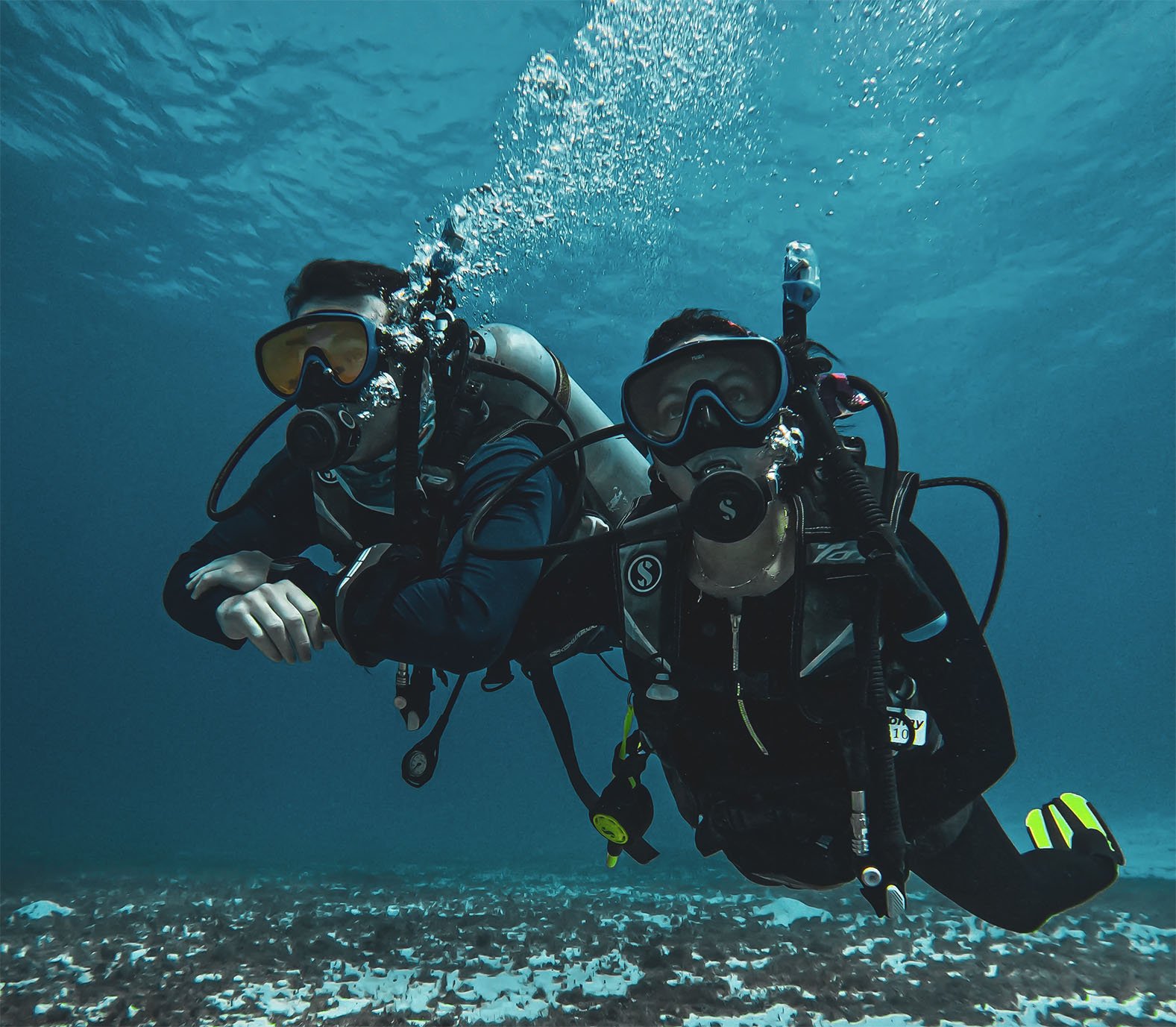
Two adult divers glide together underwater in the Caribbean. Courtesy of Angela Serrano.
Maybe you didn't grow up spending summers at the beach or learning to swim in the ocean. You may even think scuba diving is only for people who start young. But that couldn’t be further from the truth!
According to the Diving Equipment & Marketing Association (DEMA), the average age of an entry-level diver is 34 years old. It makes sense. Many people suddenly find themselves with more autonomy and income to pursue hobbies well into adulthood.
Most of our Dive in Puerto Rico peers began scuba diving in their thirties and forties. And every year, thousands of adults earn their first scuba certification and discover a hobby that combines skill-building, travel, and a deeper connection with nature.
If you've been wondering whether you're too old, too inexperienced, or unsure where to begin, we hope you feel motivated to start scuba diving after you finish reading this article.
Can I start scuba diving as an adult?
Yes! One of the biggest misconceptions about scuba diving is that it's only for people who grew up around the ocean. Many students and new divers are surprised to learn that statistically, according to DEMA, the average age of an entry-level diver is 34 years old.
In fact, many scuba professionals argue, including those here at the Dive in Puerto Rico team, that adulthood is the optimal time to learn how to scuba dive.
Many first-time divers begin in their 30s, 40s, 50s, and beyond. Furthermore, as long as their physicians deem them medically fit, diving can become a lifelong hobby. We see divers who continue scuba diving into their 60s and 70s.
As long as you meet the minimum age requirements and medical requirements established by the scuba diving certification agency of your choice, and you are comfortable in the water, you can learn to dive.
Why adults often make great scuba divers
It makes sense that many new divers are in their early to mid-thirties. Learning to scuba dive later in life actually comes with several advantages. You may find that in later adulthood, you have more financial means to pursue hobbies of your choice and perhaps more discipline to see them through.
Learning how to scuba dive as an adult can have its advantages, as adults can generally:
Follow instructions carefully.
Make thoughtful decisions underwater.
Ask questions when they need clarification.
Appreciate the importance of dive safety.
Have the financial flexibility to travel, purchase scuba gear, and continue diving.
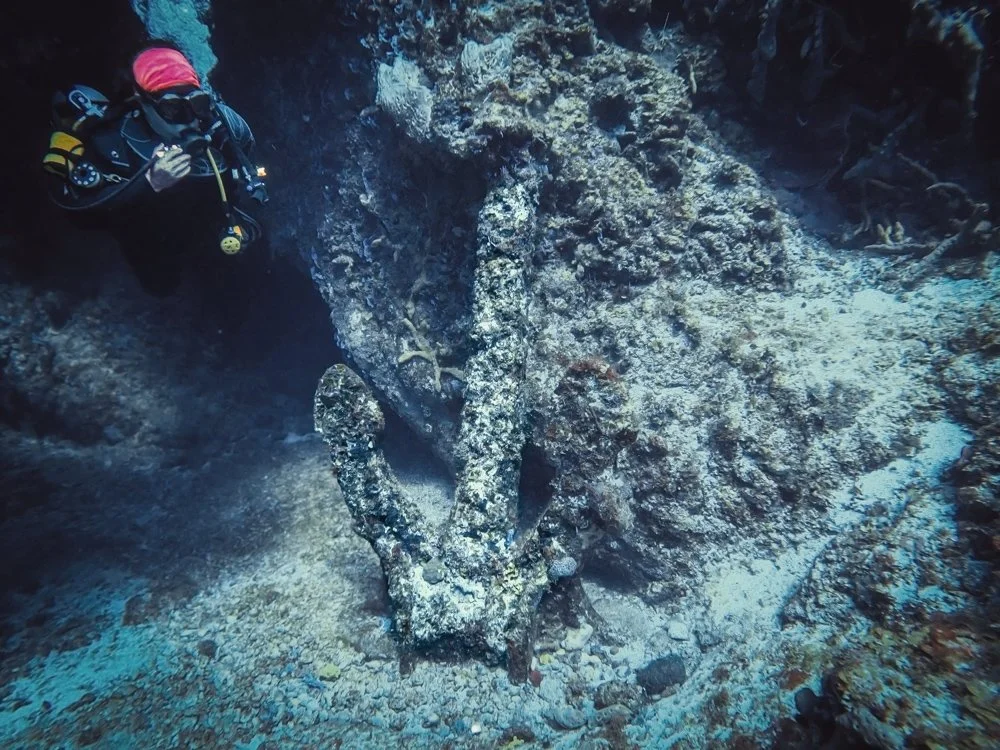
A scuba diver observes a sunken anchor while diving underwater in Puerto Rico.
Is it normal to be afraid of scuba diving?
Absolutely. Feeling nervous about breathing underwater or entering the ocean is one of the most common concerns among new divers. This can be especially true of divers who have not participated in water sports before or do not consider themselves “naturally athletic.”
However, beginner scuba diving experiences and certifications are designed with this in mind. Scuba instructors will introduce new skills gradually and allow new divers to build confidence at their own pace. Before entering open water, you'll spend time learning how scuba equipment works, practicing essential skills in a controlled environment, and becoming comfortable breathing underwater.
Many new divers say their biggest surprise wasn't how exciting scuba diving felt, but how peaceful it became once they relaxed and got used to the new sensations.
How do I start scuba diving as an adult?
Step 1: Gather information and inquire with dive centers and scuba instructors.
If you've never dived before, you have two options: schedule an introductory experience or enroll in a scuba diving course. What's the difference?
An introductory experience, also known as Try Scuba or Discover Scuba Diving, is a brief preview to help you determine whether you enjoy scuba diving. An intro experience lasts only a few hours and won't certify you as an independent diver. But it’s a great way to determine whether you want to commit to a full scuba diving course.
A scuba diving course is a formal learning program that includes more thorough theory, safety, and practical skills classes. Upon completing a scuba diving course led by professional instructors, you'll receive a certification recognized by global diving agencies. Although shorter courses are available, many aspiring scuba divers start with the Open Water Diver (OWD) course.
There are many scuba diving agencies to choose from operating worldwide; amongst the most popular are PADI (Professional Association of Diving Instructors), SSI (Scuba Schools International), NAUI (National Association of Underwater Instructors), and SNSI (Scuba and Nitrox Safety International).
It’s up to each diver to choose which agency they want to get certified with. Local availability, teaching styles, offerings, accreditation and safety practices, quality of customer service, and pricing may be important factors that influence your decision when selecting an agency.
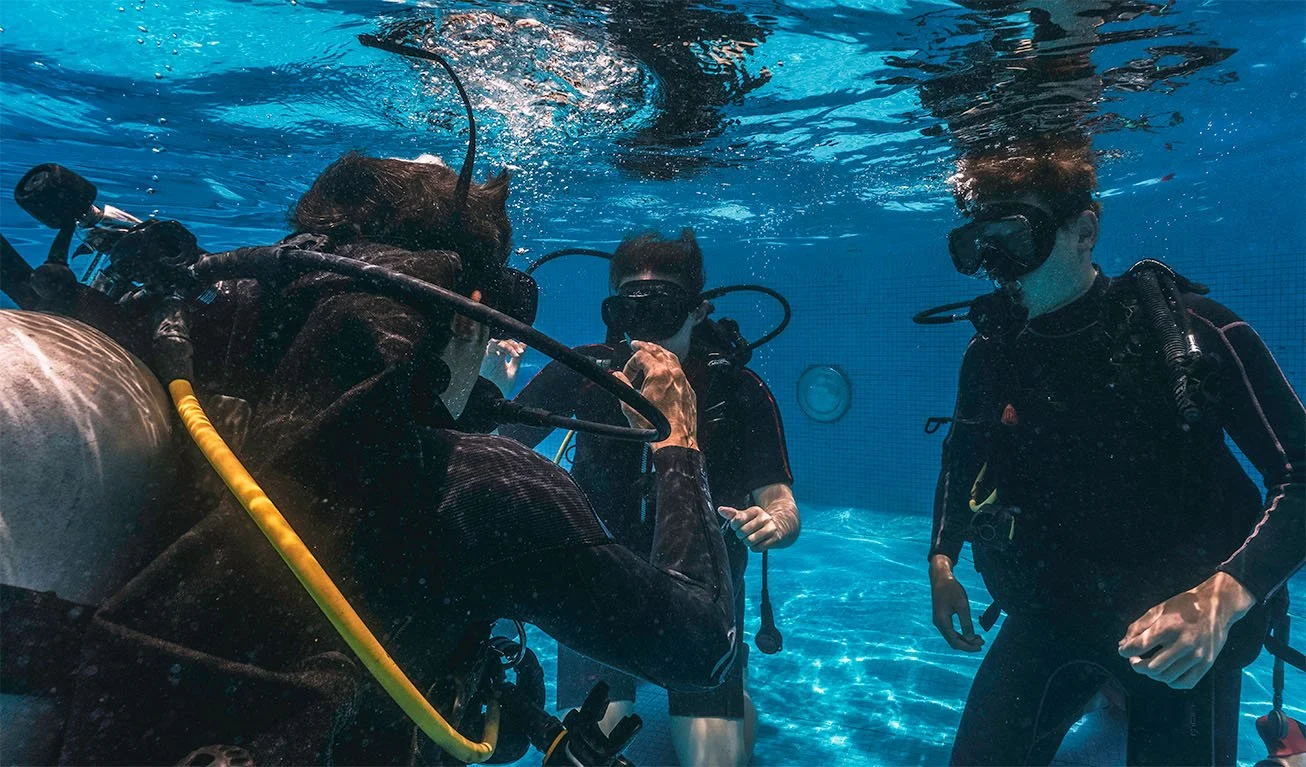
A scuba instructor teaches new students the basics of diving in a pool.
Step 2: Decide whether you want to travel or learn how to dive locally.
Depending on where you live and your ability to travel, you will have to decide whether you want to learn how to scuba dive locally (if that’s an option) or travel to a different destination. If you live in an area without access to beginner-friendly dive sites, which could range from lakes, pools, quarries, or the ocean, or you prefer to dive in different weather, you’ll have to factor in travel time and costs.
Your local dive centers will have more information about beginner-friendly dive sites, diving seasons, availability, and scheduling. If you live in a place with limited diving opportunities due to weather or geography, you may wish to consider tropical destinations that offer year-round diving.
Step 3: Complete your scuba certification or scuba diving experience.
Before you get in the water, your scuba instructor will teach you the necessary skills in a controlled environment at your own pace. Whether you choose to complete an introductory scuba experience, get your Open Water Diver certification, or select another beginner program, you can expect to learn about:
The basics of scuba diving and dive planning
Scuba equipment setup
Buoyancy control
Underwater communication
Safe descent and ascent procedures
Emergency skills
Marine conservation best practices
Want to learn more about how to choose a diving agency and how much it costs to get a scuba certification? Check out our resource “How to Get Started Scuba Diving in Puerto Rico.”
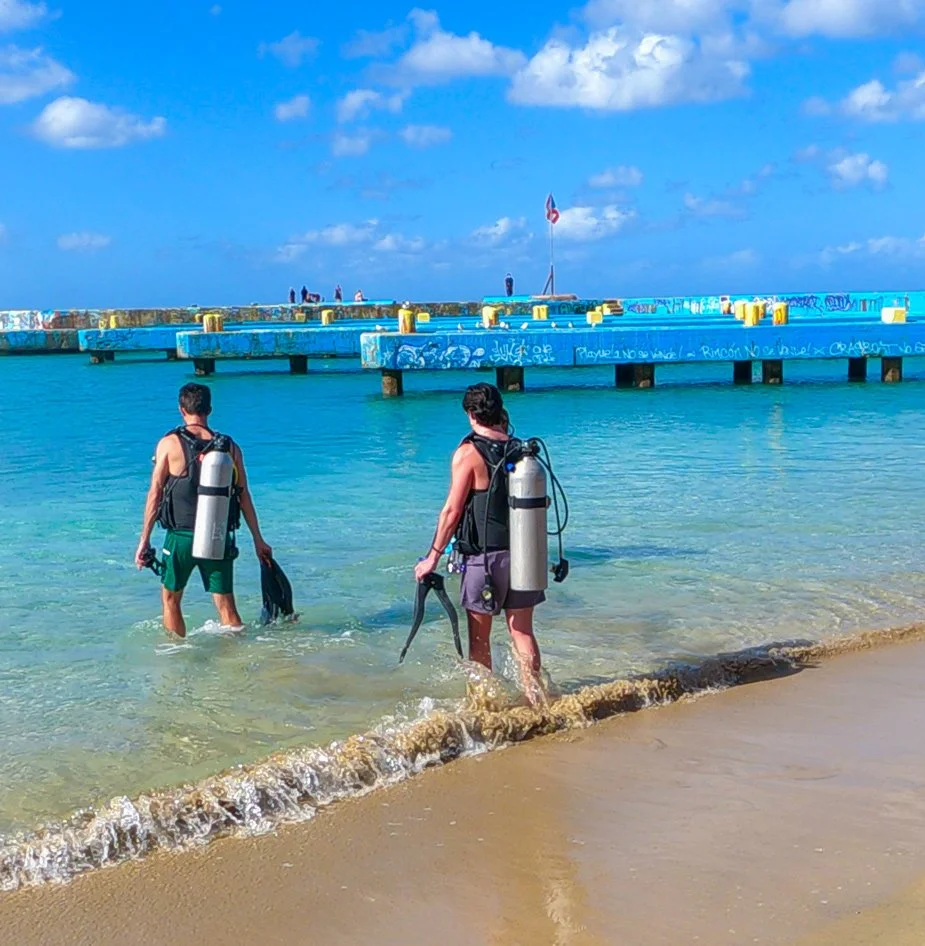
In Aguadilla, Puerto Rico, two divers enter the water from the shore to begin their dive.
What if I don't know anyone who scuba dives?
Not a problem! You certainly don't need to know any divers or have friends who are interested in scuba diving. Many certified divers started completely on their own. In fact, signing up for group scuba classes is a great way to meet new people with shared interests.
Whether you wish to book a private scuba experience or use it as an opportunity to meet new people… that’s up to you. What you’ll discover is that learning to scuba dive will open up a new community for you. Scuba diving is a group activity, and existing divers are always looking for new dive buddies.
As a certified scuba diver, you’ll find that you can gain access to social scuba groups, scuba travel opportunities, local dive trips, and more.
What if I don't have much time to dive?
Busy schedules stop many adults from trying new hobbies. Fortunately, scuba diving is surprisingly flexible. An introductory scuba experience can be completed in a single day. Open Water Diver certifications take longer, but many certification agencies offer online learning, allowing you to complete the classroom portion on your own schedule before finishing the in-water training.
And once you complete an Open Water Diver certification, you can choose how often you want to dive. Some people dive every weekend. Others dive only during vacations or a handful of times a year.
Although diving regularly helps you maintain your skills and confidence, it’s up to you whether you become a regular or occasional diver.
Why so many adults fall in love with scuba diving
For many people, scuba diving becomes much more than another hobby. It provides an opportunity to disconnect from the day-to-day bustle and reconnect with the natural world.
It is a literally immersive experience that allows you to see a different side of the world.
Every dive offers something different, whether that's watching sea turtles gliding, admiring intricate coral reefs, noticing fish with elaborate patterns, or simply enjoying the quiet rhythm of swaying underwater.
Many divers also find that scuba diving fosters a greater appreciation for marine conservation and can lead to other hobbies such as underwater photography and scuba travel.
It's easy to believe you missed your opportunity because you didn't grow up near the ocean. Do not let this discourage you! Many scuba divers had limited experience in water and learned the skills later in life. Your first breath underwater could mark the start of your next great chapter.
Frequently Asked Questions
Am I too old to learn scuba diving?
Adults of all ages become certified every year. As long as you meet the medical requirements and complete a recognized training course from globally accredited agencies such as SSI, PADI, NAUI, or SDI, age alone is not a barrier. Click the link to view an example of a scuba diving medical questionnaire form.
Do I need to be an excellent swimmer?
You don't need to be a competitive swimmer, but you should be comfortable in the water and able to meet the basic swim and floating requirements established by your certification agency.
Is scuba diving safe for beginners?
When taught by qualified instructors and practiced within your training limits, recreational scuba diving has an excellent safety record. Following established procedures, maintaining your scuba equipment in good working condition, and never diving beyond your certification level are essential parts of safe diving. For more information on diving safety and procedures, visit Divers Alert Network (DAN).