Scuba diving after dark. Four places for night dives in Puerto Rico.
Are you seeking a different scuba experience? Most people think of scuba diving as a daytime activity, but you may be amazed by how scuba diving at night can provide a vastly different experience. You could even breathe new life into your go-to dive site by simply scuba diving at night.
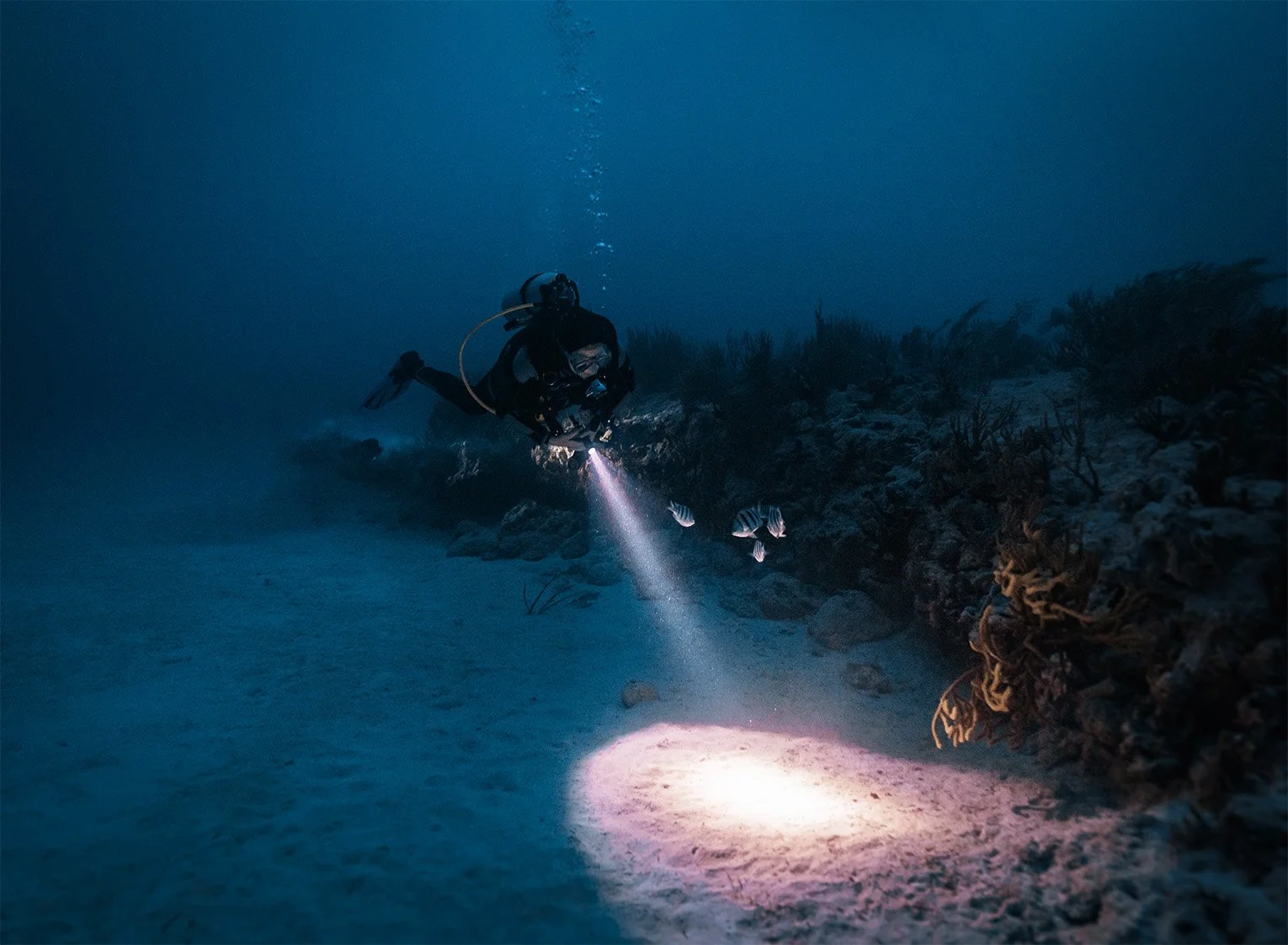
A scuba diver watches four fish along a reef during a night dive. Courtesy of Marcos Borsatto.
Night diving offers a completely different perspective on the underwater world. Familiar reefs transform as nocturnal marine life emerges and your dive light reveals details that often go unnoticed in daylight.
If you're planning a dive trip or you're a local diver looking for something different, you'll be pleased to know Puerto Rico offers opportunities for night diving.
Read on to find out about some of the best night dives in Puerto Rico, learn what makes a good night dive site, and get a reminder of important safety considerations when planning a night dive.
Why try a night dive in Puerto Rico?
Puerto Rico is known for its warm waters, beginner-friendly dive sites, and excellent shore diving opportunities. Those same qualities make it an outstanding destination for night diving.
Although every dive site is different, one thing remains constant: the reef comes alive in an entirely different way once the sun sets. Marine life exhibits different behaviors at night, such as vertical migration, where species move to the surface to feed.
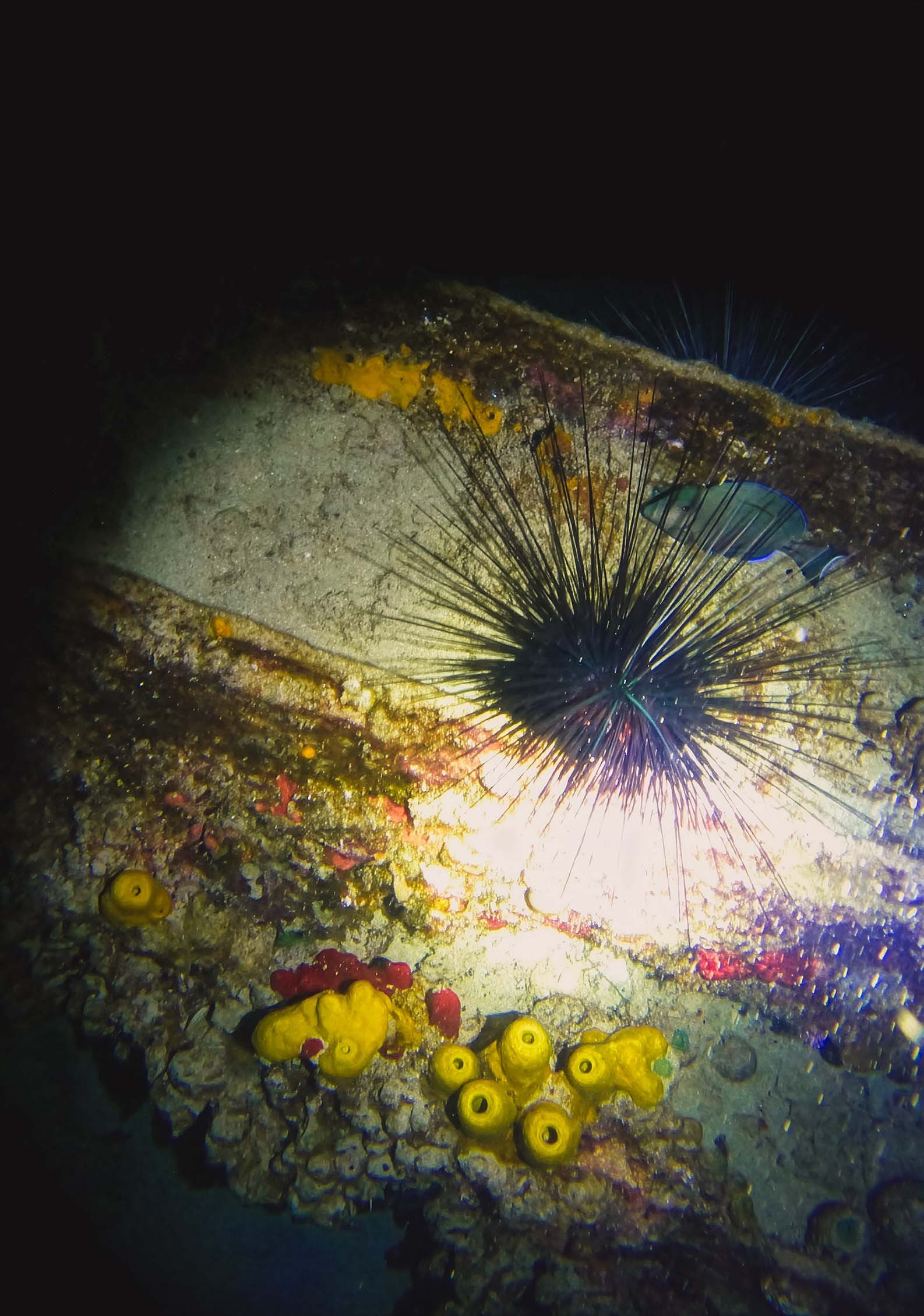
Under the cover of darkness, some species feel less threatened by predators. During a night dive, you may get to see nocturnal species that you couldn’t find during the daytime.
Depending on the location and season, divers may encounter charming marine life, including coral reefs, octopuses, Caribbean reef squid, sea turtles, rays, lobsters, schools of fish, and much more.
Beyond what you can see, night dives also encourage a slower pace. With visibility limited to the beam of your dive light, divers are able to narrow their focus and observe details they may otherwise overlook.
Lastly, if you enjoy underwater photography, you may easily become hooked on nighttime underwater photography. The dramatic contrast, isolated subjects, and opportunities to play with shadow can provide a fun challenge for photography enthusiasts.
Not yet certified? If you don’t have a scuba certification yet and are interested in diving, check out our guide on how to start scuba diving in Puerto Rico.
How is night diving different from day diving?
Any dive site, no matter how familiar, can feel like a whole different world when revisited at night. However, night diving introduces new variables.
Night diving involves additional planning, equipment, and safety considerations, and not every excellent daytime dive site is equally well suited for night diving.
Special considerations of night diving are not just limited to the time spent underwater. Low lighting can make entering and exiting the water more challenging.
When diving at night, there is less room for error. The limited visibility makes natural navigation, navigation that relies on landmarks and visual key points, challenging or virtually impossible. Additionally, some divers may feel more nervous than usual at the prospect of diving in near darkness. Diving at night does, in fact, impact your sense of spatial awareness underwater.
We strongly advise that divers new to night diving take a Night & Limited Visibility specialty course and dive accompanied by an experienced scuba diving professional before attempting to complete night dives independently.
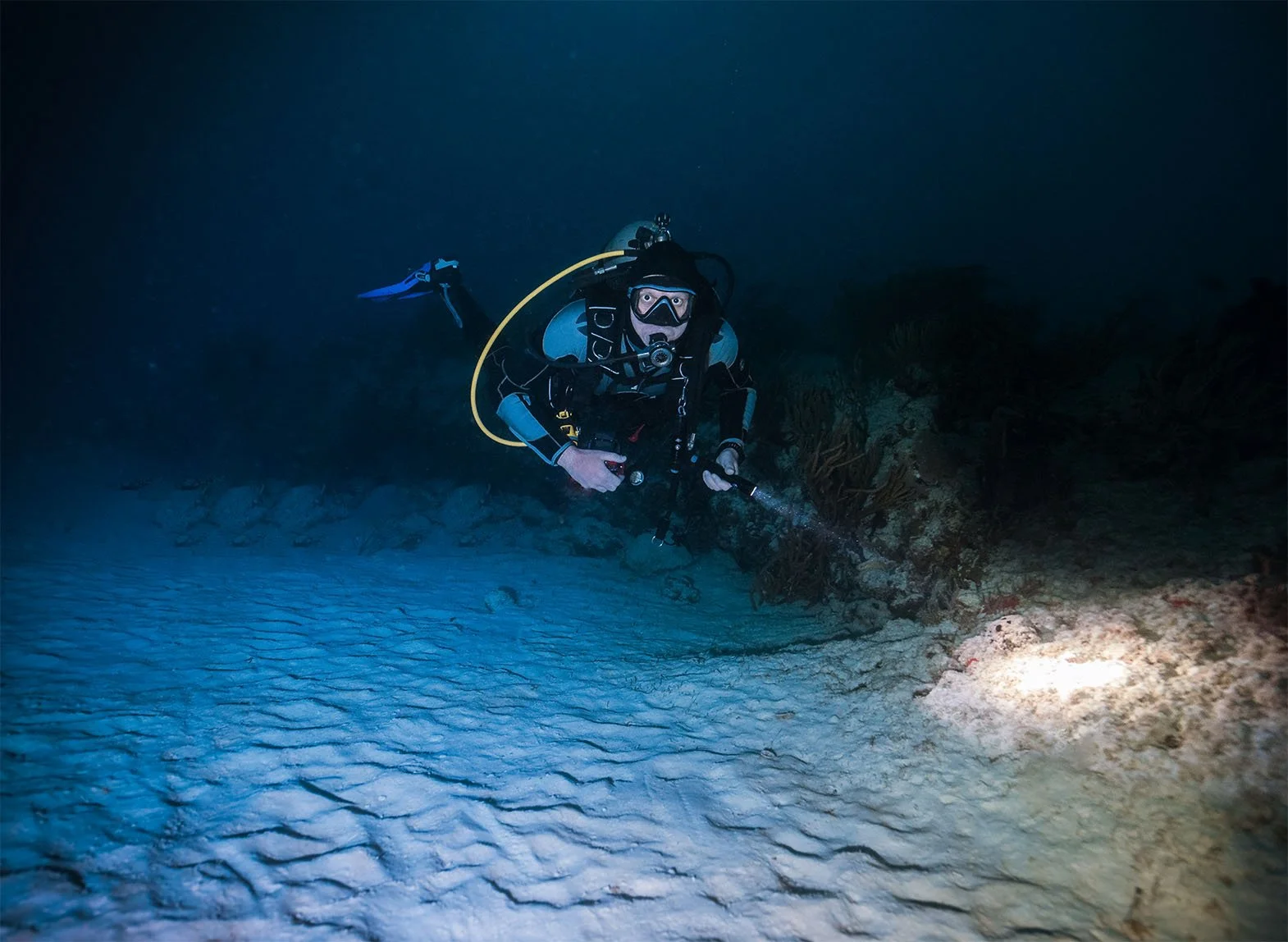
A scuba diver uses a dive light to explore a reef at night. Courtesy of Marcos Borsatto.
What makes a great night dive site?
Some of the best night dive sites in Puerto Rico share several characteristics:
Easy and well-defined shore or boat access
Relatively straightforward underwater navigation
Short distances between the entry point and the main reef or point of interest
Typically mild diving conditions
Existing surface lights or the ability to arrange them
Convenient exits after sunset.
Most importantly, conditions should always be evaluated on the day of the dive. Weather, visibility, surge, and currents are constantly changing and can affect whether a site is appropriate for a night dive.
Best places for night diving in Puerto Rico
Crash Boat Beach, Aguadilla
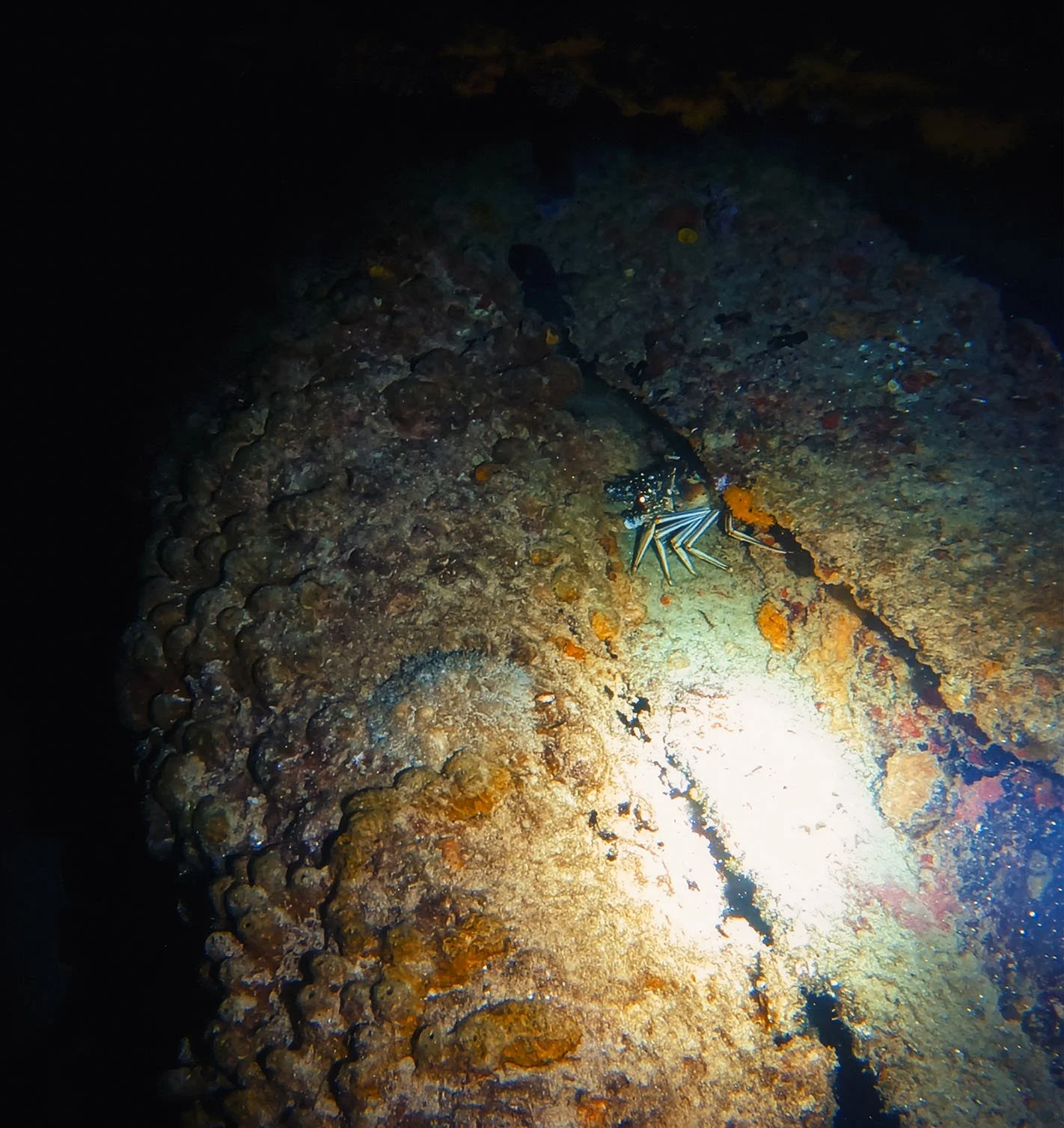
Marine life like fish, crabs, and eels peek out from underwater structures in Crash Boat Beach, Aguadilla.
This won’t come as a surprise to local divers. Crash Boat Beach is one of Puerto Rico's most recognizable shore dives. Its popularity is well deserved thanks to its easily accessible shore entry, interesting submerged pier structure, and varied marine life.
One advantage of Crash Boat is its convenient access. Nearby parking and surface lighting around portions of the beach can make gearing up and returning to your vehicle more manageable after dark.
Why it's great for night diving:
Easy shore access
Convenient parking nearby
Shallow depth of 30 ft (9 m)
Diverse marine life and underwater structures
Underwater structures that aid in navigation
A variety of local dive centers offering night-diving tours.
Steps Beach / Tres Palmas Marine Reserve, Rincón
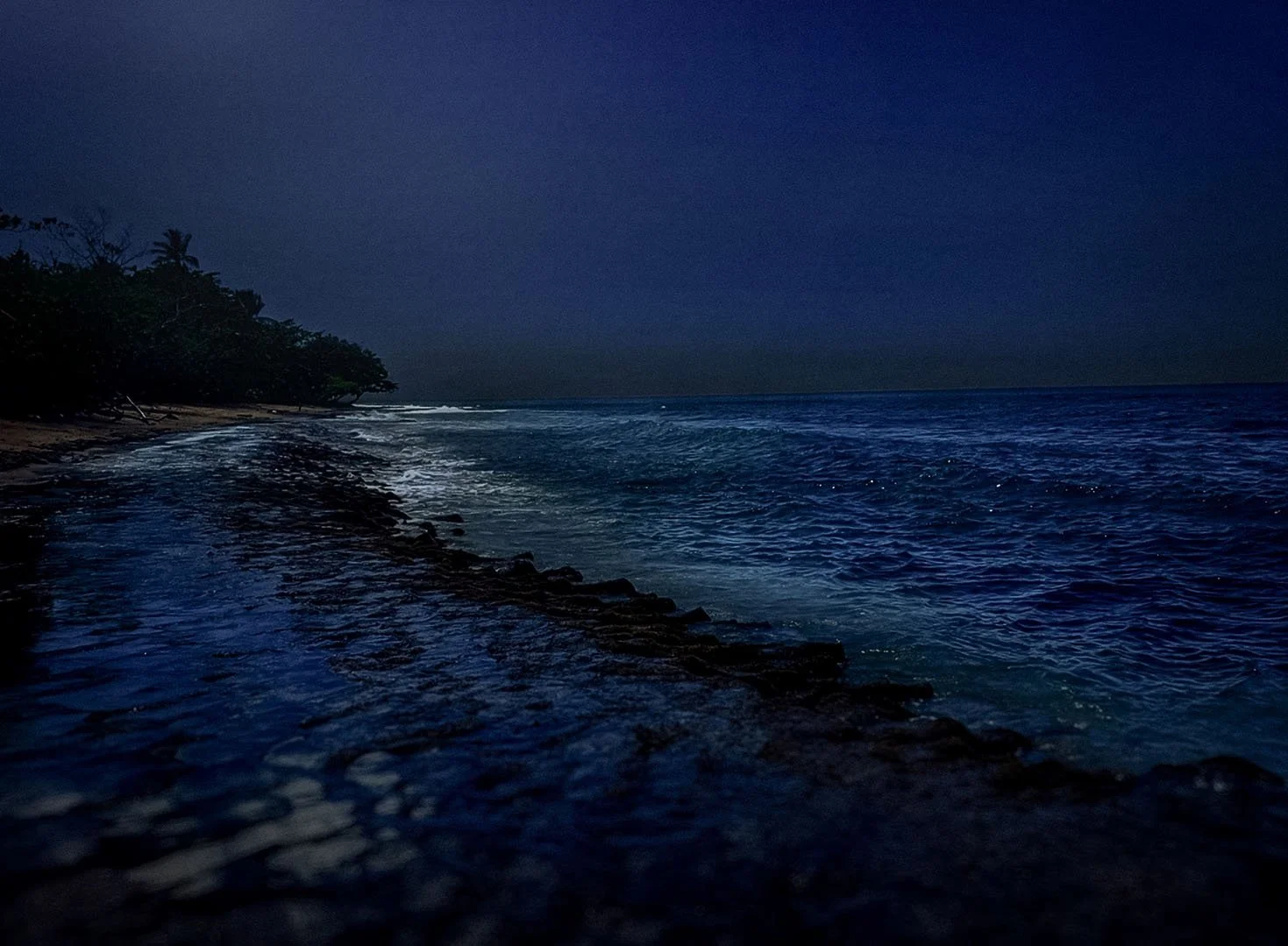
Tres Palmas Marine Reserve, shown at nighttime, is a popular beach for snorkeling and scuba diving.
For many local divers, Tres Palmas Marine Reserve is an excellent choice for daytime and nighttime dives because of its practical layout and shallow depths.
One of its biggest advantages is that the reef begins relatively close to the shore entry, reducing the amount of surface swimming and underwater navigation before reaching the main points of interest. This allows divers to spend more of the dive exploring the reef instead of covering distance in the dark.
Another benefit is the proximity of the parking area. After exiting the water, divers have only a short walk, typically less than five minutes, back to their vehicles.
One important consideration, however, is lighting above the surface. Unlike other urban shore dive locations, the area around Tres Palmas has little to no surface lighting. Divers should plan accordingly by bringing sufficient and reliable surface lights for gearing up, safely entering and exiting the water, and walking back to the parking area.
Tres Palmas is prone to swells and variable diving conditions, so we strongly advise, as with any dive, that you closely monitor conditions the day of your dive.
Why it's great for night diving
Reef located close to the shore entry
Relatively straightforward underwater route
Short walk between the exit and parking
Shallow depth of 20-30 ft (6-9 m)
Nearby dive centers offering night-diving tours.
Escambrón Beach, San Juan
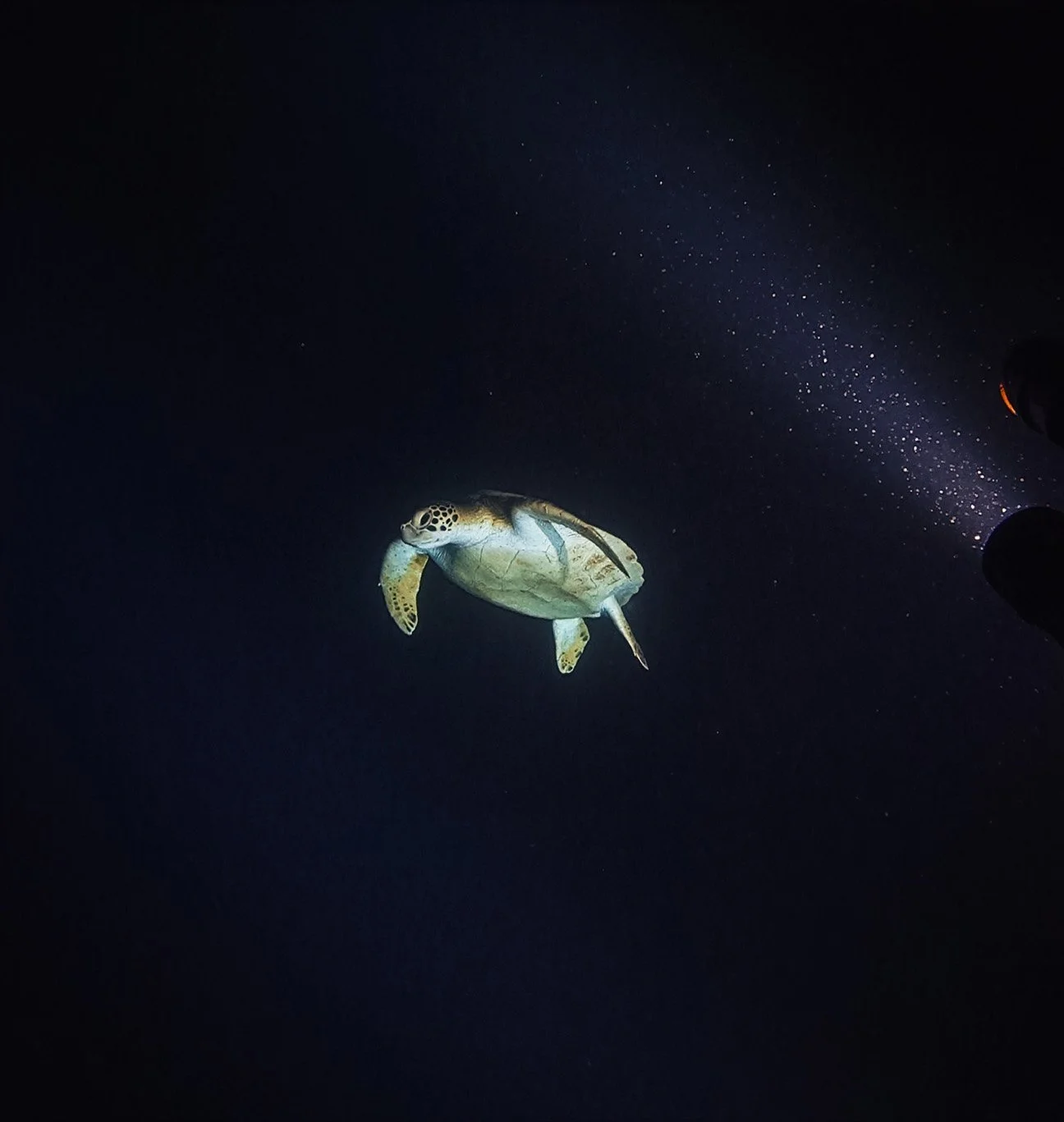
Diver encounters a sea turtle while scuba diving at night in Escambrón Beach.
Located in the heart of San Juan, Escambrón Beach is home to one of Puerto Rico's most accessible shore dives.
Its protected waters and convenient location have made it a popular destination for training dives, refreshers, and recreational diving alike. For certified divers interested in trying their first night dive, Escambrón can offer a comfortable introduction when conditions are suitable.
Nearby infrastructure, including parking and street lighting, can make preparing for and finishing a night dive more convenient than at more remote coastal sites.
One important consideration is that Escambrón Beach is prone to considerable amounts of particles and sand suspended in the water, both during the day and at nighttime. This can make night diving more challenging, as the light from your dive light can reflect off of the particles, further reducing your visibility.
It’s worth mentioning that marine life is not as abundant at Escambrón Beach in comparison to other local dive sites. However, it’s still a good dive site to practice night diving, and you may still certainly spot interesting creatures.
Why it's great for night diving
Protected shoreline
Convenient access to shore entry/exit point
Shallow depth of 30 ft (9 m)
Plenty of surface lighting
Nearby dive centers offering night-diving tours.
Multiple Dive Sites, Vieques and Culebra
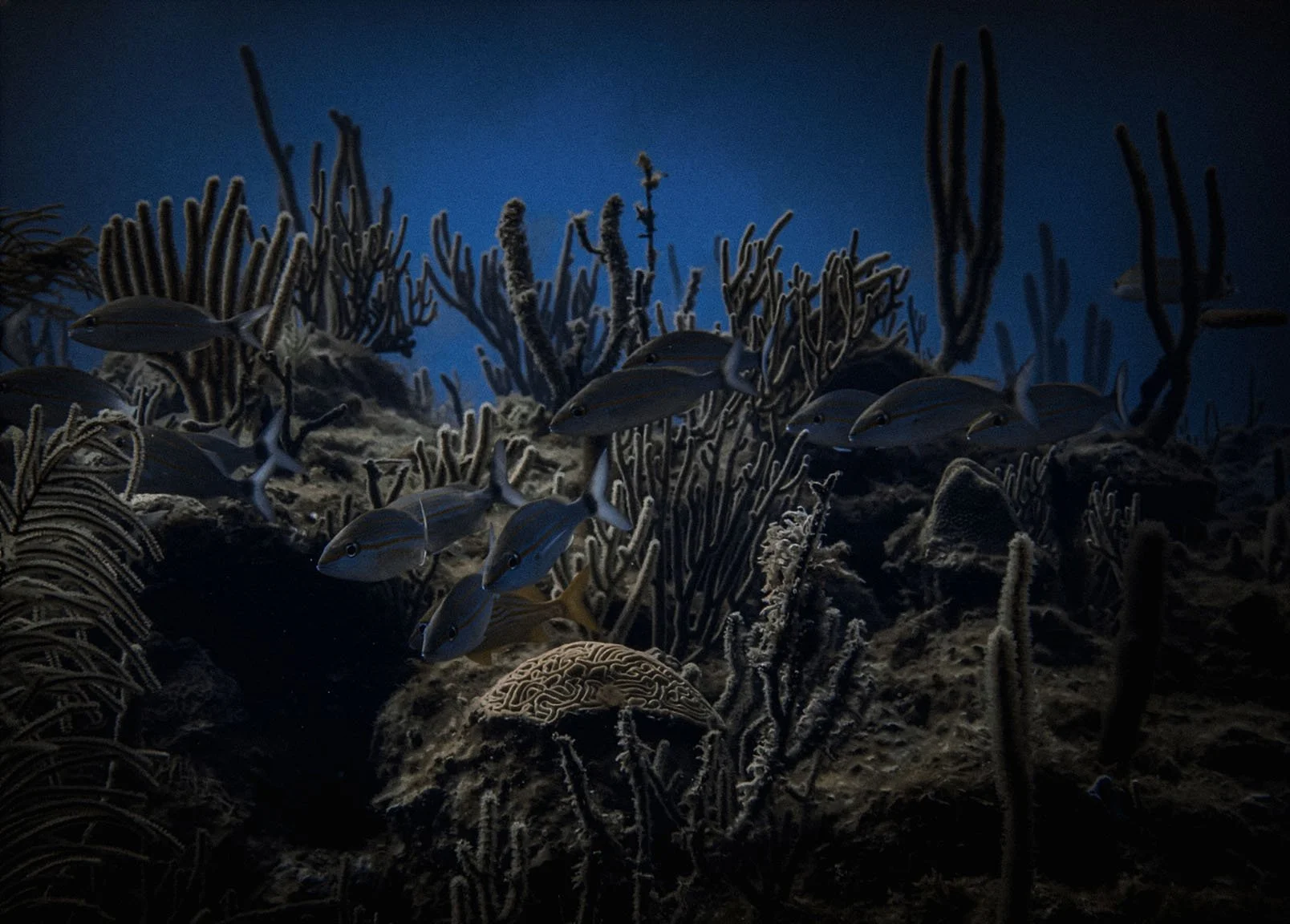
Several reefs in Vieques and Culebra are suitable for daytime and nighttime diving. Courtesy of Kevin Davis.
This may feel like a cop-out, but hear us out! While getting to Vieques or Culebra requires additional travel planning and costs, we believe they are excellent locations for divers who are serious about night diving.
The diving conditions in Vieques and Culebra are quite varied and may not be as reliable as the other spots mentioned on this list, but there’s a strong case to be made for making the trip there. Because dive sites in Culebra and Vieques receive less foot traffic (fin traffic? 😉) than those in the main island, you can find more abundant marine life.
A large number of dives in Vieques and Culebra are conducted from boats. This allows local dive operators to have a greater selection of dive sites based on conditions and visibility. Some divers prefer boat dives over shore dives as they don’t have to walk to entry and exit points with their scuba gear on. And we understand why that would seem particularly attractive during a night dive!
If you're visiting Vieques or Culebra specifically to experience a night dive, we strongly advise you to check with local dive shops about diving conditions and availability before planning your trip.
Why it's great for night diving
More abundant marine life
Varied selection of less frequented dive sites
Local dive centers offering night diving tours
Boat access allowing for flexibility based on conditions
Shallow and intermediate depths to accommodate different scuba diving skill levels.
With the right preparation, night dives can offer some of the most memorable underwater experiences. At night, you'll be amazed at how creatures behave differently and may come across unexpected marine life. Though the darkness may make you nervous, you might prefer a less crowded and quieter diving experience. We hope that these recommendations encourage you to take the plunge.
Frequently Asked Questions About Night Diving
Is Puerto Rico good for night diving?
Yes. Puerto Rico offers a combination of accessible shore dives, boat dives, reef dives, warm water, and island-wide scuba diving operators, making it an excellent destination for certified divers interested in night diving.
Can beginners do a night dive?
Night diving is best suited to certified divers who are already comfortable with their buoyancy, navigation, and basic scuba skills. If it's your first night dive, we strongly advise taking a Night Diving specialty course and diving with an experienced scuba professional.
What marine life can you see on a night dive in Puerto Rico?
Depending on the dive site and conditions, divers may encounter octopuses, Caribbean reef squid, moray eels, trumpetfish, lobsters, crabs, parrotfish, and many other nocturnal reef creatures.
What equipment do I need for a night dive?
In addition to your standard scuba equipment, you'll need a primary dive light, a backup light, surface markers and locator lights, a compass, and any additional safety equipment recommended by your dive operator or scuba instructor. Remember to dive within the limits of your certification and experience.